Looking for dependable Langley auto repair? Pick a shop with ASE-certified or Red Seal mechanics, factory-level training, factory scan tools (J2534-compliant equipment), and CAN bus and oscilloscope diagnostics. Demand written detailed line-item estimates, documented fault codes, bidirectional testing, and warranties explicitly outlined for both parts and labor. Require OEM or equivalent parts, proper ADAS/TPMS calibration, and verification road tests with Mode 6 plus freeze-frame data. Verify timelines, authorization caps, and storage policies. Be wary of vague lump-sum quotes or aggressive upsells. You'll discover how to assess nearby options efficiently.
Essential Highlights
- Validate ASE/Red Seal technicians with OEM training, up-to-date scan-tool subscriptions, and documented ADAS, hybrid/EV, and CAN diagnostics proficiency.
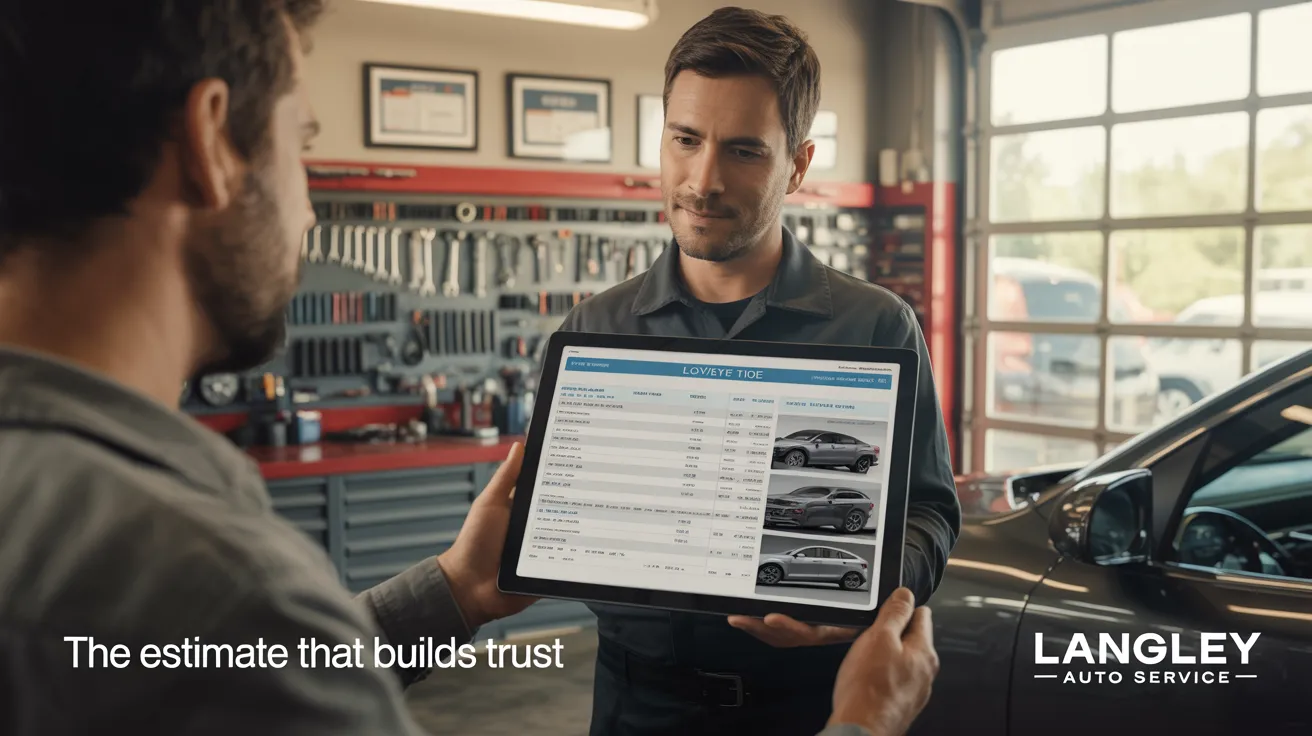
- Require written, itemized estimates listing labor rate, hours, part numbers, diagnostic fees, taxes, and warranty terms before work begins.
- Verify factory-level tools: bidirectional scanning features, J2534 programming, diagnostic scopes, and documented frozen frame, Mode 6, and live data analysis.
- Require clear authorization policies, maximum spending caps, change-order authorizations, and storage fee documentation to prevent unexpected costs.
- Ensure post-repair verification: test drive, documentation of calibration for alignment, TPMS, and ADAS, and countrywide parts-and-labor warranty coverage.
What Makes Trusted Langley Mechanics Apart
Prior to booking any appointment, trusted Langley mechanics stand out through strict certifications, transparent diagnostics, and disciplined process control. You notice it in how they log findings, measure wear limits, and confirm faults with reproducible tests. They convey repair options with underlying evidence, not guesswork.
You also see consistent scheduling, clear estimates, and parts sourcing that specifies OEM vs. aftermarket by tolerance, warranty, and lead time. They give back your replaced components, log torque specs, and conduct road testing against defined acceptance criteria. Their local reputation isn't hype; it's established through reliable completion schedules, zero-return metrics, and clean, calibrated equipment. Review customer reviews for signal: watch for detailed problem statements, corrective actions, and long-term results. When shops systematize process and data, you get trustworthy outcomes every visit.
Certifications, Training, and Experience to Look For
Prior to handing over your keys, confirm credentials demonstrating professional expertise and responsibility. Confirm ASE qualifications at the shop and technician level; A1-A9 Master status signifies broad diagnostic proficiency, while L1 provides advanced driveability expertise. Inquire about which technicians possess these certifications and when they were last renewed.
Look for OEM training designed for your vehicle brand. Current OEM coursework delivers familiarity with servicing methods, torque requirements, software updates, and factory scan-tool workflows. Confirm access to factory service data and subscription-based calibration files.
Examine experiential depth. Prioritize technicians with proven experience on your make, hybrid/EV systems, ADAS calibrations, and CAN bus diagnostics. Verify evidence of oscilloscope use, smoke testing, and data logging. Confirm the shop's equipment list: factory-level scanners, J2534 pass-thru, NVH analyzers, and alignment systems.
Transparent Costs, Estimates, and Guarantees
While repair costs can fluctuate depending on vehicle and issue, a reliable Langley shop will outline costs up front and in writing. You should receive a itemized estimate that specifies labor hours, labor rate, parts numbers, shop supplies, taxes, and any diagnostic fees. Request itemized invoices that mirror the estimate so you can confirm pricing, scope, and changes before signing off on work. Demand a written approval process for change orders and a cap on not-to-exceed costs.
Establish warranty coverage lengths for both parts and labor before service starts. A professional shop provides coverage terms, mileage limits, exclusions, and transferability, and explains claim procedures. Verify whether warranties are nationwide or local, and whether roadside assistance applies. Preserve all documentation; it's your evidence for adjustments, comebacks, or prorated corrections.
Quality Parts and Diagnostic Technology
Because reliability starts with what goes under the hood, prioritize shops that source factory-spec or top-grade aftermarket parts suited for your vehicle's specifications and service history. You should have components with validated fitment data, proper tolerances, and manufacturer-approved materials. Demand OEM replacements for safety systems, emissions, and electronics where accurate calibration matters.
Just as crucial, assess the shop's diagnostic stack. Look for factory-level scan tools, bidirectional controls, and oscilloscope capability to validate sensor signals, CAN bus integrity, and actuator responses. With modern scanner advancements, technicians can conduct module coding, software updates, and guided fault tracing rather than guesswork. Confirm they document freeze-frame data, mode-6 results, and live PIDs to pinpoint root causes. When parts quality and diagnostics align, you reduce comebacks, protect performance, and copyright warranty compliance.
Maintenance Services That Prolong Vehicle Life
You prolong component lifespan when you organize fluid changes at recommended intervals, sustaining viscosity, additive packages, and thermal stability. You also lower rolling resistance and uneven wear by repositioning tires and setting alignment to factory specifications. Combined, these services ensure stable performance, safeguard driveline and suspension systems, and reduce total cost of ownership.
Planned Fluid Service
Systematically renewing your vehicle's fluids safeguards critical systems, averts premature wear, and prolongs service life. You'll lower heat, friction, and corrosion by observing factory intervals for engine oil, transmission fluid, brake fluid, power steering fluid, and coolant. During oil service, a technician applies quality oil filters to preserve proper lubrication and trap contaminants that accelerate component wear. At set mileage or condition-based triggers, a coolant flush renews corrosion inhibitors, preserves ideal operating temperature, and shields head gaskets, water pumps, and heater cores. Transmission fluid exchanges stabilize shift quality and clutch longevity. Brake fluid replacement prevents moisture-induced boiling and caliper corrosion. Power steering fluid service protects pump seals and steering feel. Documented fluid maintenance safeguards warranties and maintains reliable performance in Langley's varied driving conditions.
Rotation and Alignment of Tires
Regularly rotating tires and verifying wheel alignment distributes wear evenly, preserves tread depth, and stabilizes handling. You should rotate tires every 8,000-10,000 km, following the correct pattern for directional, staggered, or conventional setups. This balances load across axles, mitigates uneven wear, and maintains braking efficiency. When performing alignment, technicians configure camber, caster, and toe to manufacturer specifications using calibrated sensors. Correct geometry minimizes rolling resistance, protects wheel bearings and suspension bushings, and enhances fuel economy. You'll observe enhanced straight-line tracking, crisper turn-in, and more reliable winter handling on wet or icy Langley roads. Monitor for pull, off-center steering, feathered edges, or cupping-indicators that alignment is out. Pair rotations with pressure checks and road-force balancing to extend tire life and protect ride quality.
How to Notice Red Flags Before You Book
Before handing over your keys, look for warning signs that reveal inferior craftsmanship or questionable business practices. Scrutinize the shop's digital reputation: varying hours, no physical address, or stock images indicate instability. Analyze customer feedback thoroughly; collections of vague praise, identical phrasing, or newly created profiles suggest suspicious reviews. Validate certifications and equipment—missing trade licenses, old scanners, or more info dirty bays demonstrate poor quality control.
Review estimate clarity. A reputable shop lists parts, labor hours, taxes, and shop supplies; unclear lump sums conceal overbilling. Be attentive to high-pressure upselling, especially on non-urgent items portrayed as "urgent safety issues" without test data. Examine warranty terms-vague coverage or exclusions transfer risk to you. Finally, note communication: slow responses, evasive timelines, and no written authorization process are red flags.
Key Inquiries to Ask Your Auto Technician
Thoughtful questions eliminate speculation and shield your budget. Have the garage evaluate before greenlighting work, and obtain a written estimate with parts, labor hours, and line-item pricing. Check whether they will utilize OEM components, OE-equivalent parts, or aftermarket replacements, and why. Demand warranty clarification: duration of coverage, kilometer restrictions, component versus work coverage, transfer options, and what's not covered. Validate technician credentials (Red Seal, brand-specific training) and torque specification protocols for safety-critical components.
Define communication expectations: who contacts you, update frequency, preferred channel, and approval thresholds for additional work. Request the root-cause analysis, not just the failed component, and whether related systems were tested. Request your old parts back for verification. Clarify turnaround time, road-test protocol, and calibration steps (ADAS, TPMS, alignments). Finally, confirm diagnostic fees and storage policies.
Locating the Perfect Shop in Your Langley Area
Begin by identifying nearby shops for convenient access to regular upkeep and repair emergencies. Confirm technician credentials (such as Red Seal, ASE) and ongoing training to guarantee competency with your vehicle's systems. Require a written, itemized estimate policy that details diagnostic fees, parts and labor pricing, and approval thresholds.
Nearness and Accessibility
Around your daily routes through Langley, proximity and access can influence your selection of auto repair shop. Assess travel time during peak traffic, access to and from major corridors, and parking availability. Shops with convenient neighborhood access reduce delays for vehicle drop-offs and midday inspections.
Check that business hours align with your commute window. Request information on after-hours key drop, secure on-site storage, and digital approvals so you don't waste trips. A Fast shuttle or designated ride-hailing zone minimizes downtime when you drop off your vehicle. If you rely on transit, verify walking distance to main bus lines and safe, illuminated pathways.
Plan alternate routes for construction and detours. Focus on facilities that deliver ETAs, provide real-time status updates, and coordinate pickups accurately when work is completed.
Certifications and Training
Easy access brings you through the door; qualifications maintain your vehicle's standards. While reviewing Langley automotive shops, validate technician qualifications and continuing education schedules. Inquire about evidence of brand-particular qualifications (GM, Toyota, VW) as well as professional benchmarks such as ASE or Red Seal. Validate they preserve current diagnostic software subscriptions and calibration processes for ADAS, hybrid systems, and TPMS.
Assess how techs were instructed. Top-tier shops combine formal education with apprenticeship pathways under senior diagnosticians. Determine whether they undertake structured units, log hours, and proceed through progressive skill tiers. Continuous learning is crucial, so question about online certifications from manufacturer academies and reputable platforms that revise content as software and torque specifications progress.
Finally, examine mentorship, tooling audits, and documented test procedures. Certified methods minimize comebacks and copyright safety and warranty compliance.
Open Estimates Policy
Remove the guesswork by demanding a detailed, itemized estimate before any repairs start. You should expect parts, labor hours, shop supplies, taxes, diagnostic fees, and disposal charges broken down with upfront pricing. Request OEM or equivalent part numbers, labor rate per hour, and a fault code or inspection note backing each recommendation. Request estimate timelines: when you'll receive the quote, how long it remains valid, and the expected start and completion windows.
Demand thresholds for variance-authorize a maximum deviation percentage and mandate approval before any change order. Confirm whether the shop stands behind the quoted labor time or employs a standardized labor guide. Validate core charges and return credits in writing. Finally, ask for a revised estimate after diagnostics to match scope, cost, and schedule before authorizing work.
Commonly Asked Questions
Will Langley Shops Offer Loaner Cars or Shuttle Services While Repairing Your Vehicle?
Yes, several Langley shops make available transportation choices during repairs. You'll see that some offer Courtesy vehicles for extended service durations, typically requiring early booking, valid insurance, and a clean copyright. Others provide Ride services within a set radius, operating on set schedules. You should confirm availability when scheduling, as capacity varies by shop and workload. Ask about fees, mileage restrictions, fuel policies, and liability terms to choose the most suitable option for your repair duration.
How Do Local Repair Shops Address Eco-Friendly Disposal of Fluids and Parts?
Service centers isolate used oil, coolant, brake fluid, and batteries as hazardous waste, store them in labeled, sealed containers, and document chain-of-custody. They partner with certified recyclers for oil re-refining, coolant distillation, and battery and metal recovery through recycling programs. Filters are drained and compressed; refrigerants are recovered per EPA Section 608. You'll observe spill-prevention plans, SDS compliance, and manifests demonstrating proper transport and disposal, limiting environmental impact and regulatory risk.
Can I Provide My Own Parts, and Will Shops Install Them?
Yes-many shops will install customer parts, but policies vary significantly, like an exploding toolbox full of possibilities. You'll typically sign a waiver acknowledging warranty implications: the shop will not warranty the part and may reduce labor coverage if the customer parts fail or cause collateral damage. Expect examination for compatibility, quality, and safety specs (OEM or aftermarket). You'll also accept accountability for delays, returns, and rework. Always check written policies and labor rates in advance.
What Are Typical Turnaround Times for Seasonal Tire Swaps in Langley?
You can expect 30-60 minutes for a basic seasonal tire swap in Langley; add an additional 15-30 minutes for TPMS resets or wheel balancing. During peak seasonal scheduling (initial frost/spring warmth), wait estimates can reach 1-3 hours, with bookings scheduled 3-10 days ahead. Mobile services average 45-75 minutes on location. If studs or corrosion are involved, plan 90 minutes. Reserve early, arrive with clean wheels, and confirm proper torque settings and re-torque policy at 100 km.
Do Mechanics Provide After-Hours Key Drop-Off and Secure Pick-Up Options?
Absolutely-several shops include after-hours access with a secure dropoff and coded lockbox. As the adage goes, "trust but verify." You'll deposit keys into a tamper-resistant slot, finish a work authorization, and receive confirmation via electronic message or text. For pickup, some offer smart lockers or digital codes once payment is confirmed. Confirm surveillance coverage, insurance, and time limits, and question regarding liabilities, immobilizer handling, and ID verification to guarantee chain-of-custody integrity.
Final Thoughts
You possess the tools to vet Langley mechanics: certifications, transparent estimates, OEM-quality parts, and modern diagnostics. Ask direct questions, compare warranties, and watch for red flags like vague pricing. Example: You bring a 2016 Civic with a misfire to a shop that conducts a compression test, scopes the ignition, and displays you live data before replacing a single coil—backed by a two-year/40,000 km warranty. Follow the same, and you'll secure reliable, efficient, and traceable repairs.